新宿天鹅
微信正在把自己变成一个AI_我的网站

A |
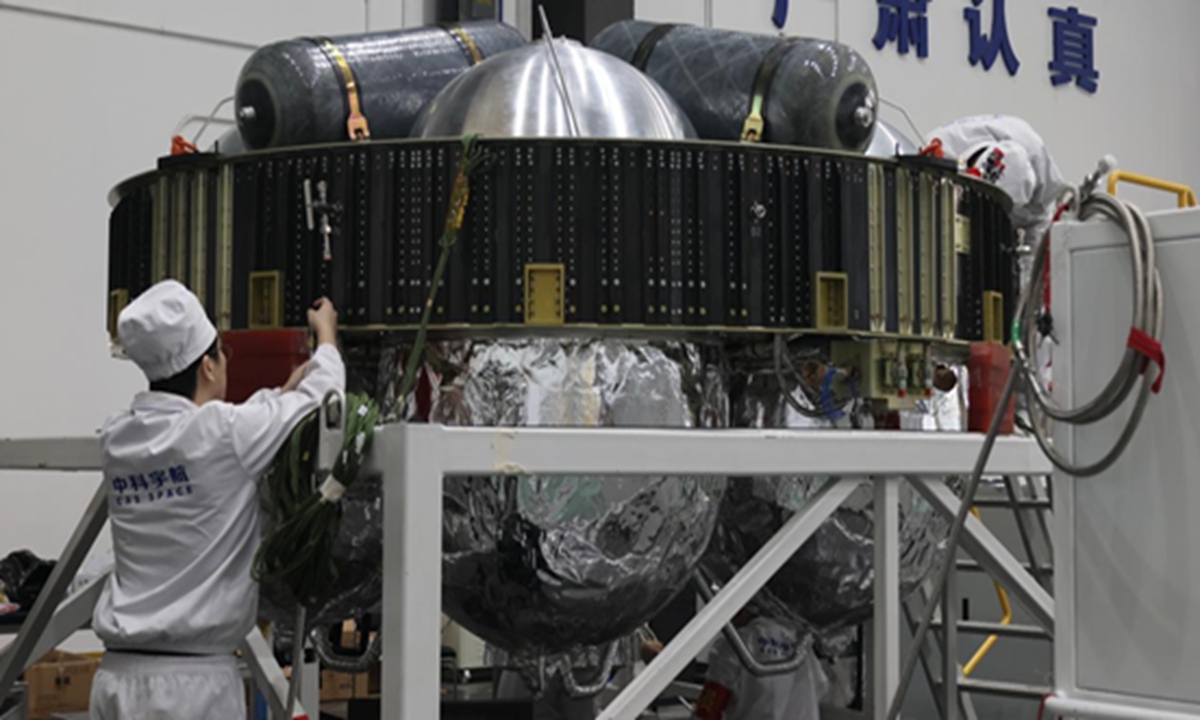
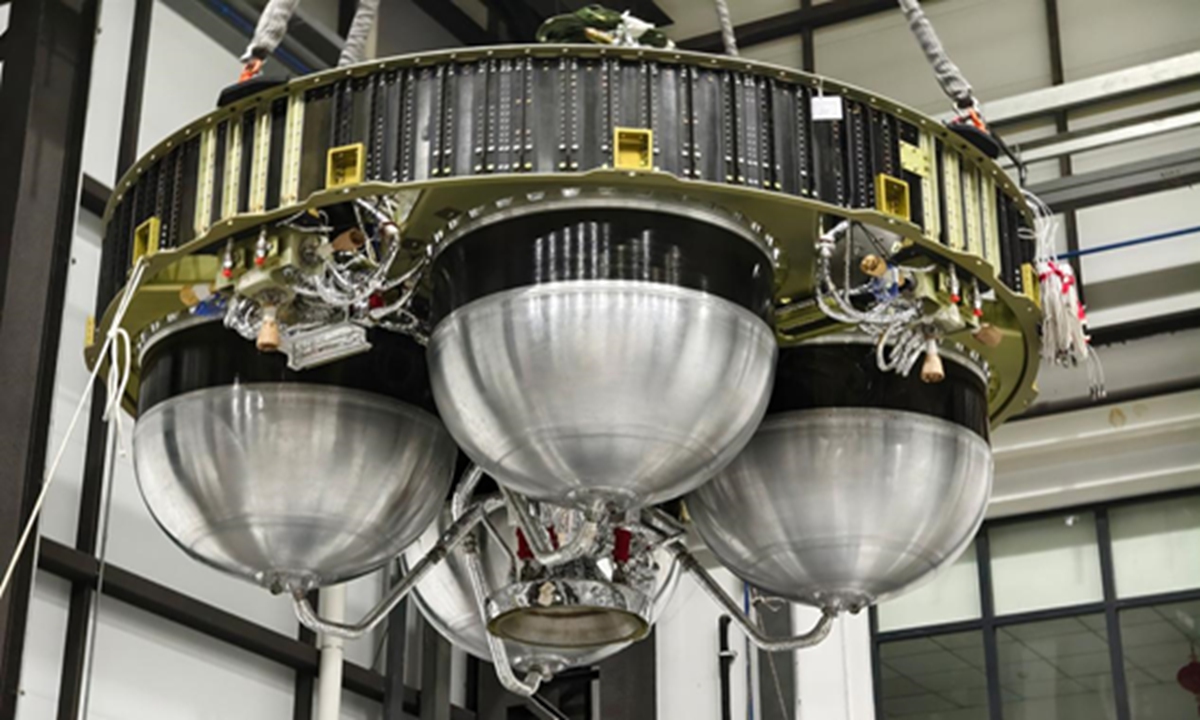
Lixun-1 upper stage, a versatile "space tug" developed by China's commercial space firm CAS Space, is scheduled to make its maiden flight in the first quarter of 2027 after completing a series of key propulsion-system tests, the developer and its chief designer told the Global Times on Tuesday.
The "tug" is designed to ferry satellites from one orbit to another and support missions ranging from constellation deployment to lunar exploration.
While the main stages of a rocket carry payloads from the ground into an initial orbit, an upper stage takes over once the craft is in space. By repeatedly restarting its engine and changing orbit, Lixun-1 can deliver satellites to higher or different orbits, distribute multiple spacecraft to separate destinations during a single launch, or send probes onto trajectories toward the moon and beyond, Global Times learned from the developer.
Yang Haoliang, chief designer of the Lixun-1 upper stage, compared the system to a shuttle service. "If the regular stages of a launch vehicle are like a long-distance bus," - they carry the upper stage and satellites from Earth to a near-Earth parking orbit - the upper stage then takes over as a "space tug," carrying its satellite "passengers" onward to their designated orbital "stops," Yang explained.
That capability can have a direct impact on how efficiently satellites are launched and operated, Yang said. If a satellite has to climb from an initial orbit to its final destination using its own engine, the process can consume a considerable amount of onboard propellant and reduce the fuel available during its operational life. An upper stage can instead perform that orbital transfer, helping conserve satellite fuel and potentially extend its service life.
It can also make one rocket launch do more work. Instead of releasing a batch of satellites into roughly the same orbit, Lixun-1 can repeatedly ignite its engine and maneuver between deployments, sending different satellites to different altitudes and inclinations. Yang said this would help accelerate constellation deployment while improving the efficiency of individual launches.
The practical ambitions behind the system are backed by a major technical milestone reached this month. In August, Lixun-1 completed its PV-001 integrated propulsion-system coordination firing test, during which the entire system operated smoothly for 566 seconds.
Yang told the Global Times that the current Lixun-1 upper stage has a thrust of 20 kilonewtons and can achieve a specific impulse of 315 seconds, which he described as reaching an internationally leading level. The August firing covered the planned profile for the maiden mission, an important step before the system proceeds to flight testing.
The test was more than a demonstration of the engine itself. As an important system-level verification during development, it examined the coordination and engineering reliability of the engine pressurization system, propellant delivery system, propellant management system and servo-control system under the fully integrated configuration.
Of a series of tests that accumulated 5,211 seconds of firing time, the latest one focused on three core technologies: a high-thrust, high-performance 20-kilonewton upper-stage engine capable of multiple starts; balanced propellant delivery from multiple parallel tanks; and a highly reliable integrated electrical system. Their successful verification means Lixun-1 has completed its system-level testing and is ready to move into the flight-test phase, according to the developer.
Lixun-1 has been designed as a modular and generally adaptable upper stage rather than a system tied to only one rocket. It is intended to work with CAS Space's Kinetica-2 and Kinetica-2 heavy-lift variants as well as other launch vehicles, Yang said.
When paired with the Kinetica-2 family, Lixun-1 could significantly expand the rocket's mission range. For communications missions, it could deliver satellites to geosynchronous transfer orbit or even directly to geosynchronous orbit, conserving satellite propellant while supporting the deployment of high-throughput satellites and future 6G communications spacecraft.
For multi-satellite missions, the combination could distribute spacecraft to different orbital altitudes and inclinations during a single launch, potentially serving both low-Earth-orbit constellations and medium- or high-orbit payloads. For deep-space missions, it could place probes onto Earth-moon transfer trajectories and support lunar exploration, Yang said.
The upper stage is designed to be able to conduct more than 20 engine ignitions, autonomously plan orbital-transfer routes and operate under the vacuum and extreme temperature conditions of space. After completing payload deployment, it can also carry out orbital disposal maneuvers to reduce space-debris risks.
Yang said the Lixun-1 and Kinetica-2 combination is designed to cover the vast majority of commercial satellite launch requirements while retaining the ability to participate in major national space projects. More broadly, the upper stage forms part of CAS Space's effort to build launch capabilities reaching medium and high Earth orbits and deep space, extending the reach of China's commercial space sector toward higher orbits and more distant destinations.
。

B |
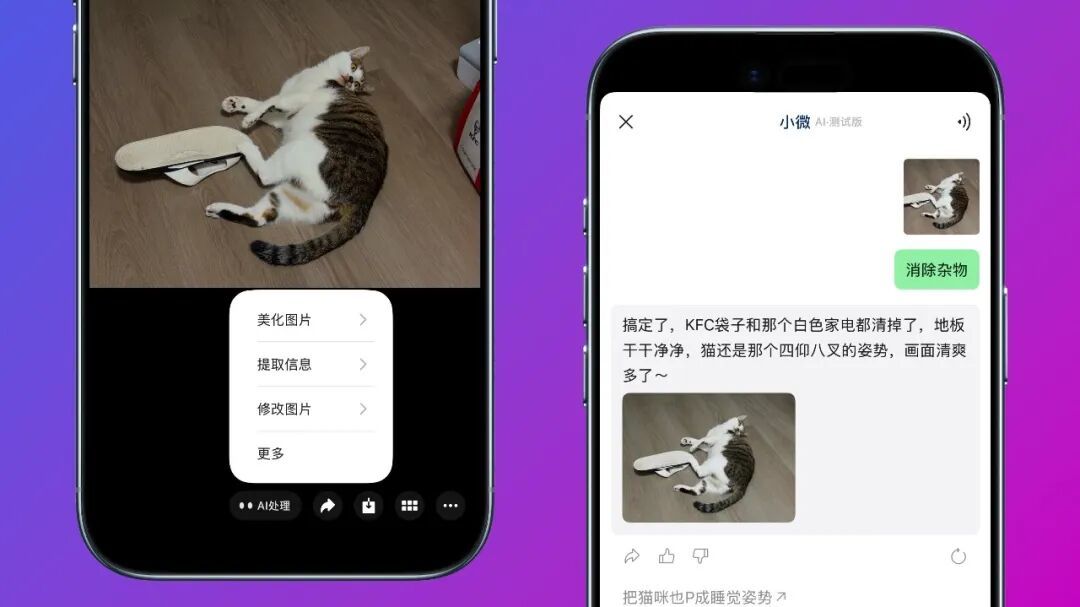 这次灰度测试的功能叫做「AI 修图」,它会出现在微信聊天的图片窗口中,和原本的「查看原图」按钮并列把底下一排塞满:
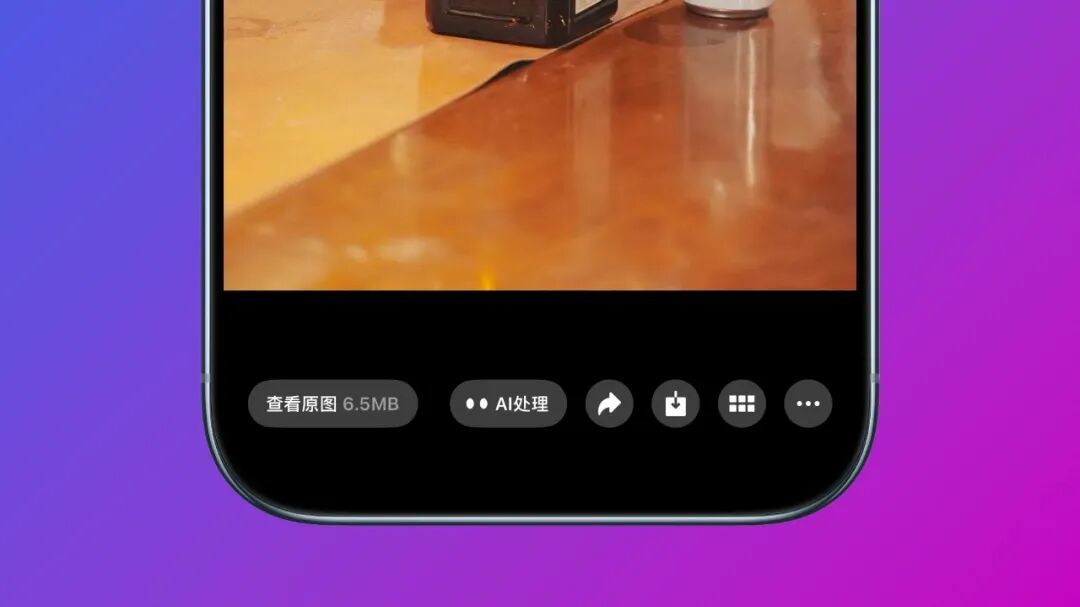 无论是你发的图还是接收到的图,在预览窗口点击「AI 处理」之后就可以看到 3 大类共 11 个小类的预设功能:
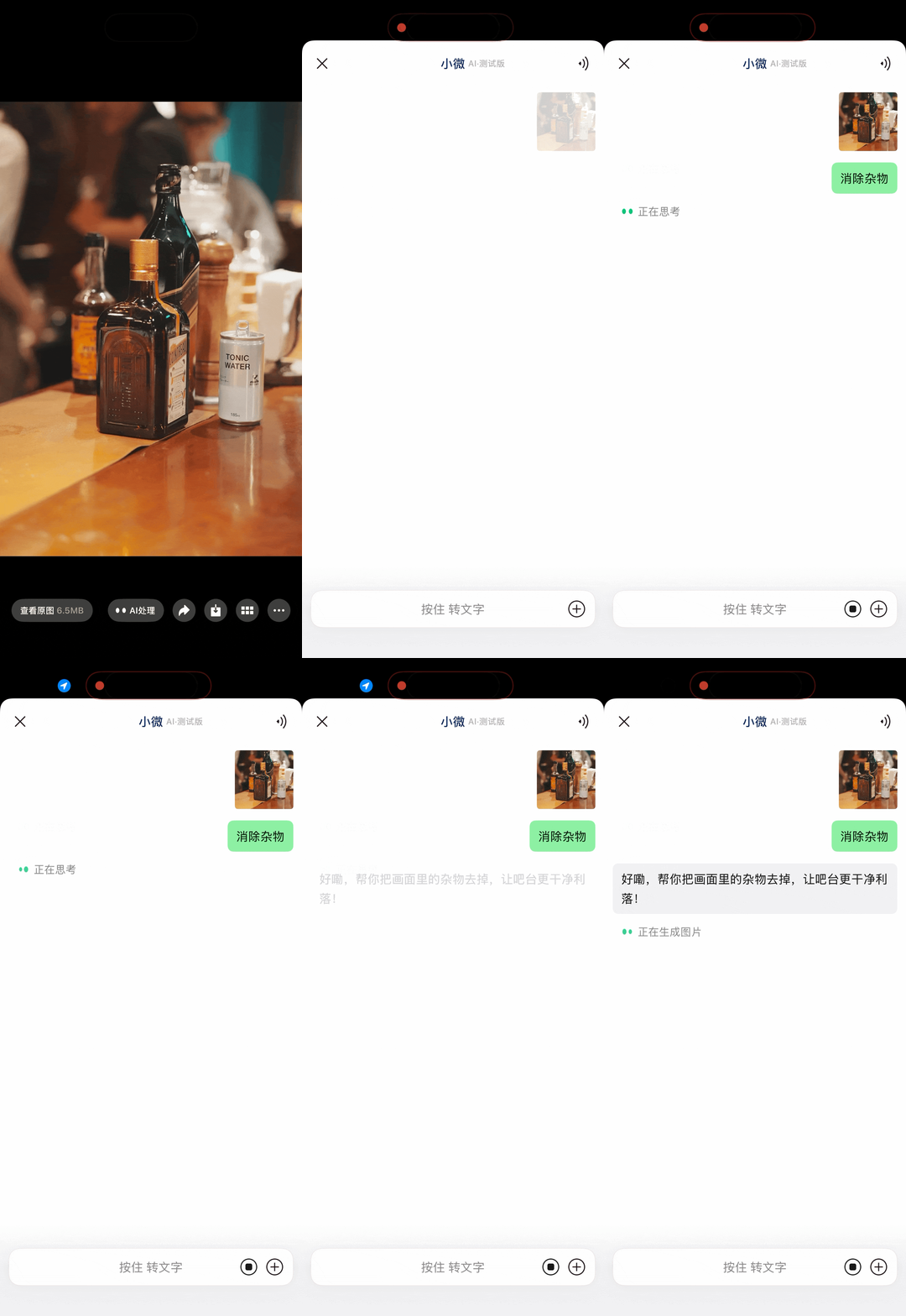
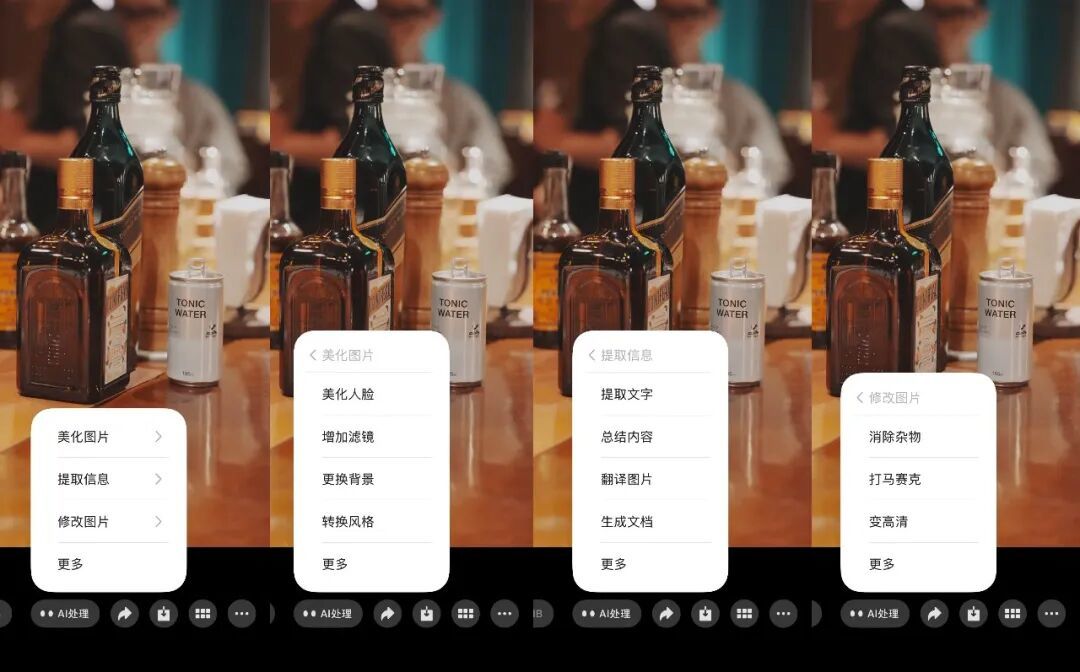 常见功能比如美颜、加滤镜、翻译文字、自动打码和超分等等一应俱全,点击就会跳转到微信小微对话框中开始工作:
 至于小微修图的质量嘛……只能说还行。
C | 经过测试,小微在美肤、扩图、调整比例和消除杂物之类的功能上表现尚可,虽然能看出破绽,但对需要边聊边做的轻量编辑完全足够了——
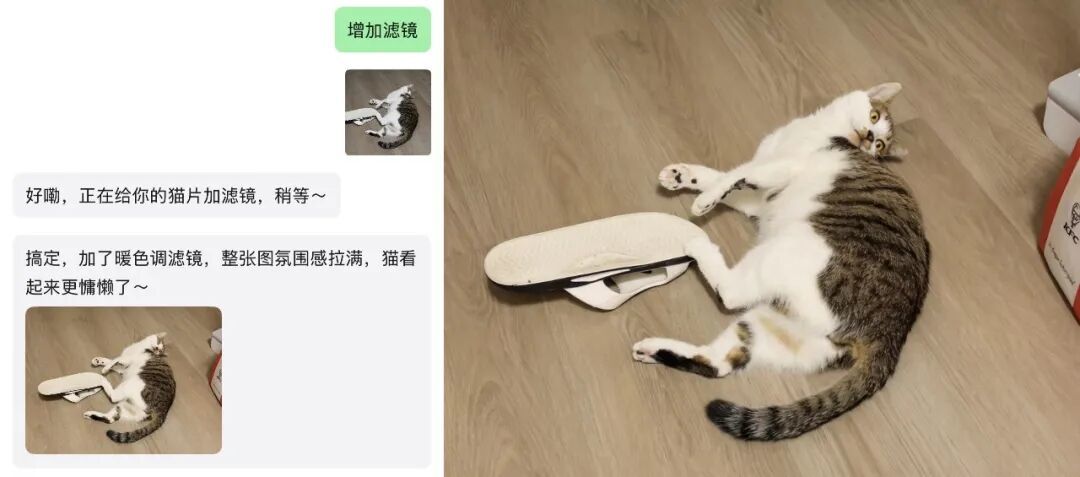
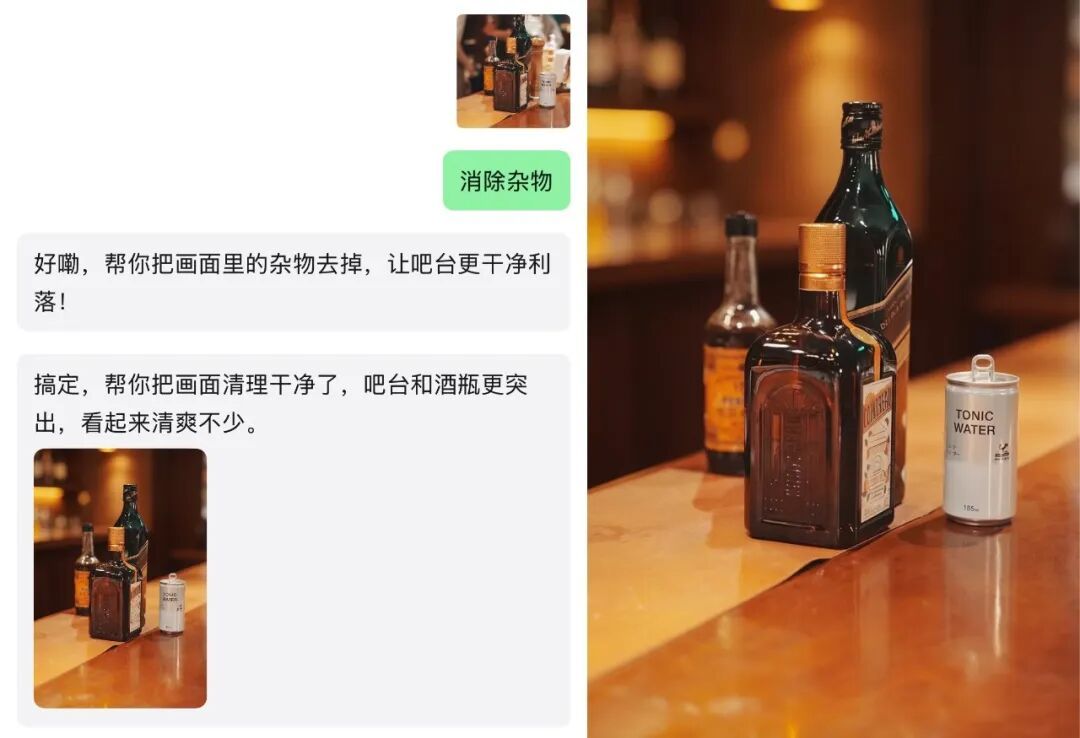 但如果你也被灰测到了微信主界面左上角的小微入口的话,那直接进入小微对话框把要求发给它,和使用那些快捷开关其实是完全一样的:
 不过目前看下来,小微的修图能力在「编辑」和「信息提取」方面还算不错。可一旦涉及重绘或者生成新内容,就比较吃用户的提示词水平了——
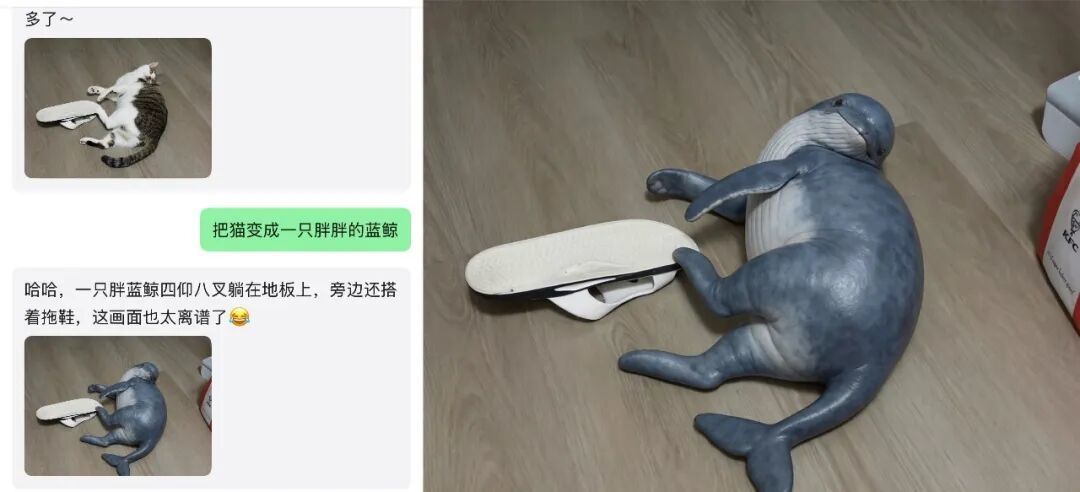 通过直接询问小微,我们得知它目前使用的还是微信定制的 WeLM 模型,大概率是之前已经在对话、小程序里面上线的 WeLM-80B 版本。而纵观 2026 年至今,我们可以清晰地看到一件事:哪怕像微信这种「牵一发而动全身」的超巨型 App,也开始非常积极地拥抱 AI 功能了。从 3 月首次出现微信研发 AI Agent 的消息、到 6 月初确定使用形式,再到小微的灰测和拓展,我们可以梳理出微信的 AI 时间轴:
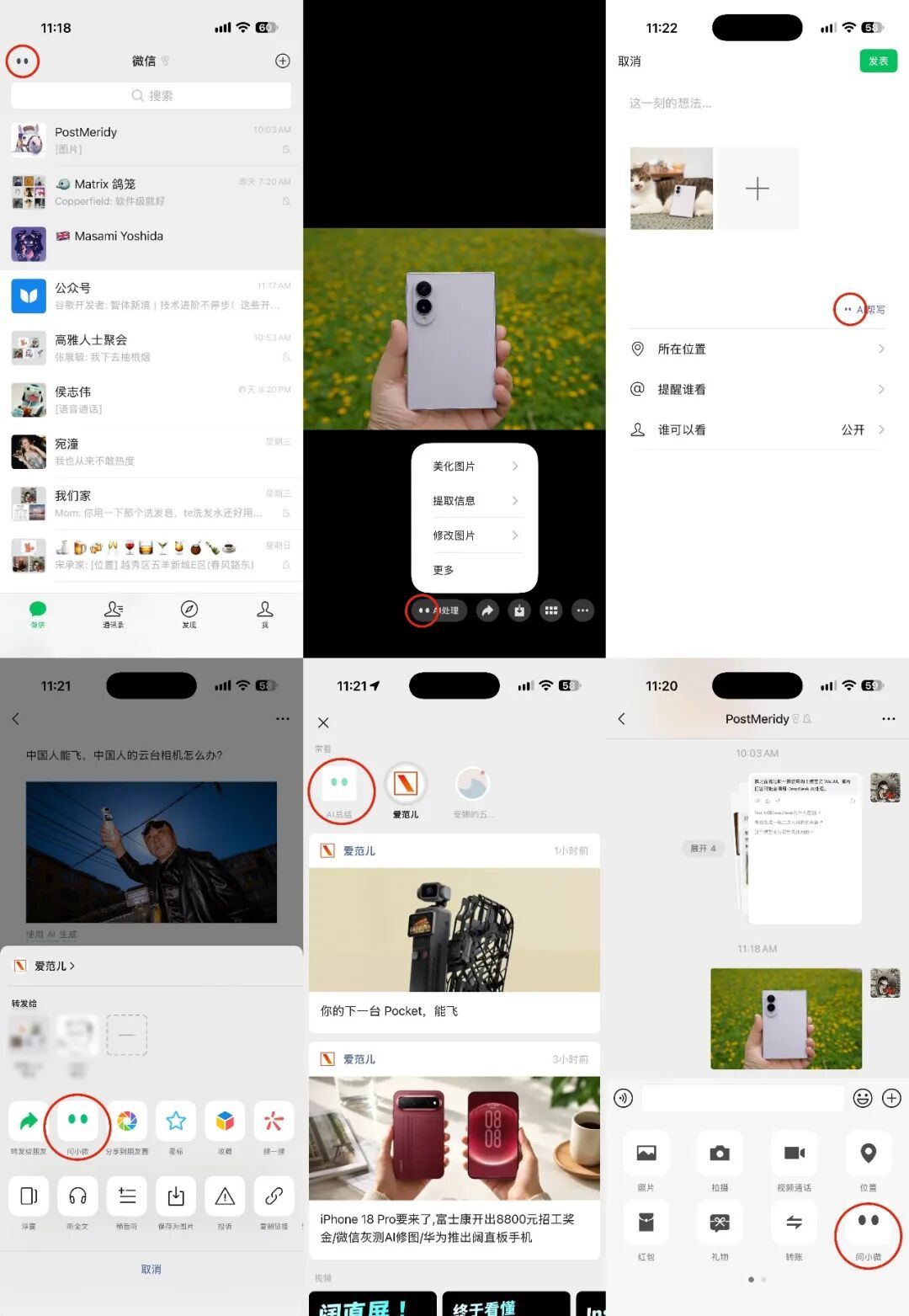
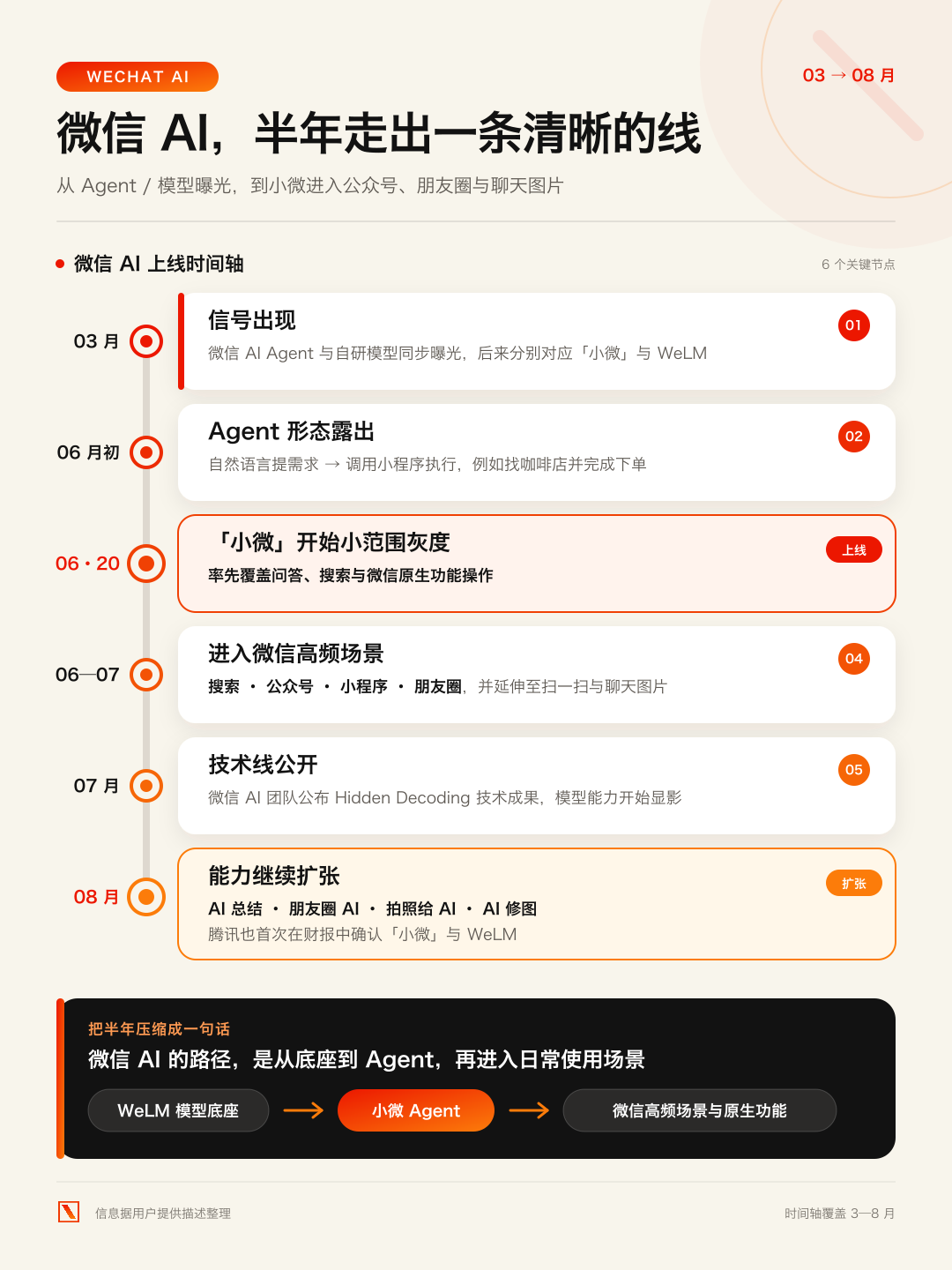 重点在于,微信没有急着再造一个豆包或者 ChatGPT,而是在把尝试把一个综合模型能力和入口拆开,塞进微信原本已经存在的功能里。目前可见的就是,除了主页左上角的小微聊天框之外,「小微功能」其实已经渗透进了微信的方方面面——
 而 WeLM 底层模型也是围绕这种「方方面面」来设计的。比如腾讯在最新的财报中首次披露:微信团队定制的 WeLM 在设计时就重点考虑了微信场景和推理效率,目前公开的 WeLM-HD4-80B 和 WeLM-HD4-617B 总参数量分别达到 800 亿和 6170 亿,但实际激活的参数只有 30 亿和 230 亿。
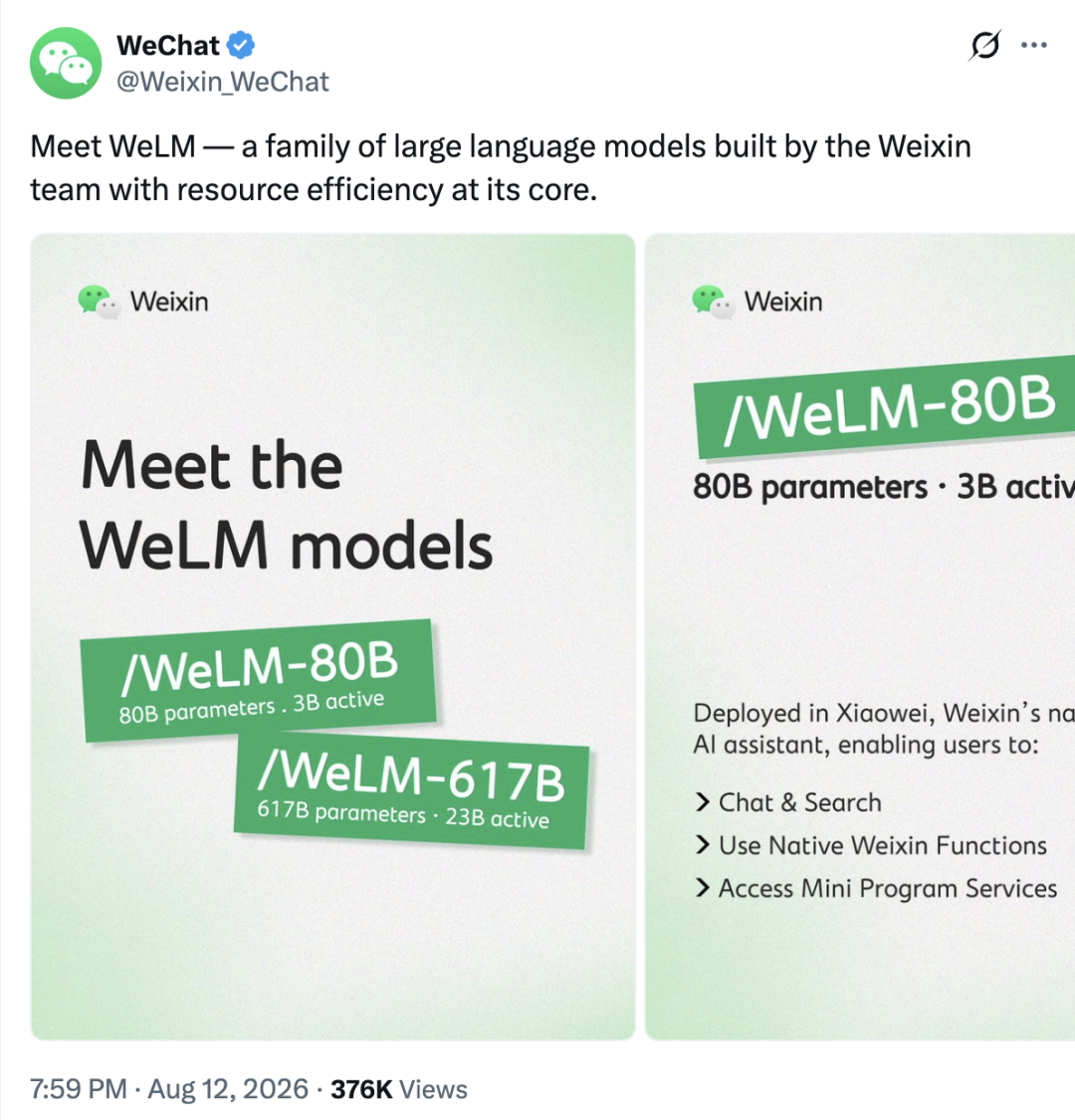
图|X @Weixin_WeChat微信团队还提出了诸如 Hidden Decoding 之类的技术,通过将每个 Token 扩展成多个内部计算流,提高单 Token 的计算量,同时用 Stream-Factorized Attention 控制额外的注意力开销。这些技术参数背后,其实不是腾讯的技术边缘,而是微信最现实的问题:算力成本。截至今年 6 月,微信及 WeChat 合并月活已经达到 14.39 亿。

D | 小微一旦全面进入搜索、图片、朋友圈、公众号乃至小程序场景……每一次推理成本乘上十亿级用户规模,都会变成一个天文数字。

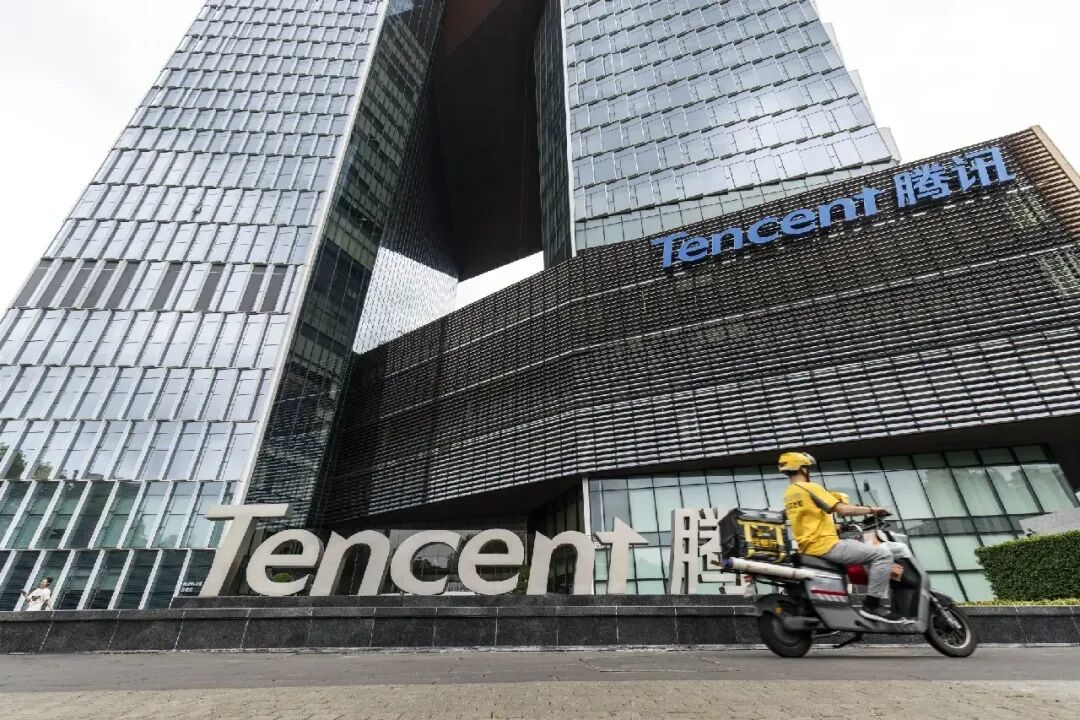
图|财联社所以 WeLM 如此强调推理效率,表面能力看上去往往只是「差不多得了」,其实不是模型限制,而是微信的巨大运营成本压力。更重要的是,相比腾讯的 WorkBuddy,微信小微走出了一条完全不同的推广路径。微信手握 14 亿月活,以及无数人每日高频使用的功能场景,根本不需要去「给模型造 App 入口」,反而是让小微尽可能淡化唯一入口的概念、拆分进具体功能里。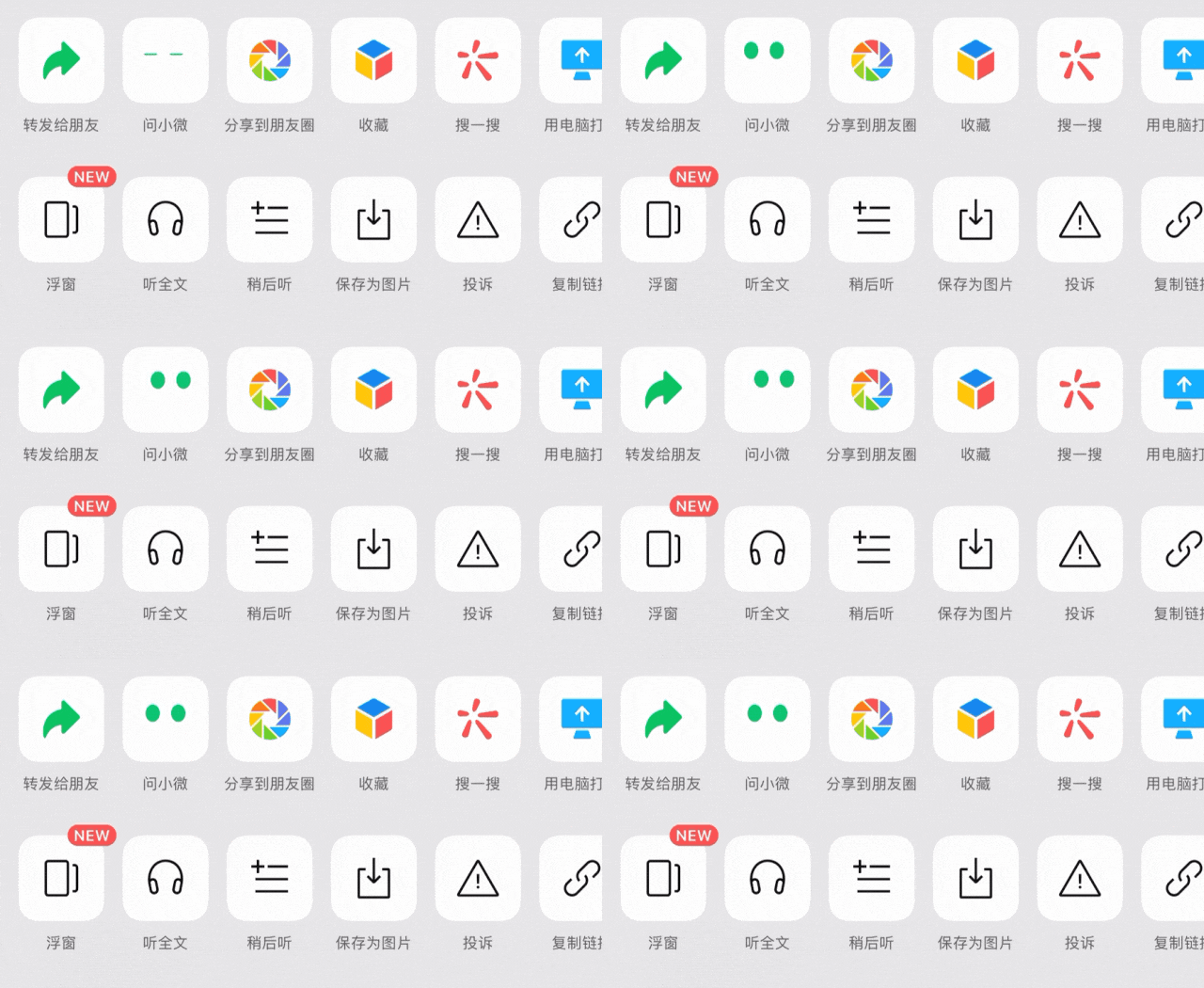 然而世界是物质的,哪怕是微信这种地位的 App,也无法完全避免谈钱的问题。根据财报相关资料,腾讯最新季度资本开支达到 528 亿元,同比增长 176%;自由现金流则转为负 138 亿元,其中重要原因就是 AI 相关的算力采购和预付款。

E | 腾讯披露,这些基础设施正在支持模型、WorkBuddy、CodeBuddy,以及微信 AI 项目的训练和推理。
图|彭博社另一个数字更直接——腾讯当季 Non-IFRS 营业利润为 756 亿元,如果剔除元宝、WorkBuddy、CodeBuddy、小微等 AI 产品的影响,实际上的利润则是 861 亿元。

F | 也就是说,按照腾讯自己的财务口径,新 AI 产品目前正拖累着腾讯集团约 105 亿元的季度经营利润。这也是腾讯接下来必须回答的问题:AI 已经有产品、有用户、有使用量,但什么时候真正变成一门生意?
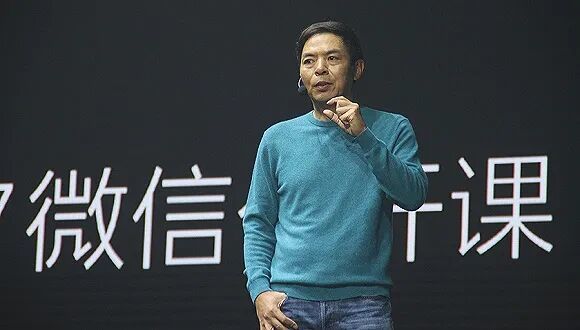
图|新浪财经微信上线 AI 修图这件事本身并不大。真正的重点是,两个月前还藏在主界面角落里的「小微」,正在逐渐成为一个 Gemini 一样「无处不在」的 AI。继续沿着这条路线走下去,小微不会成为一个「AI 小程序」,而是微信的 AI 能力本身。
Current article:http://gyw1goy.zhuaicaisaanzhenshunnaiwei.bond/list_23fj10f/dlr.html
Published on:13:30:26
淄博新闻


- ·《奥德赛》内地票房突破5亿
- ·Sri Lanka to donate Covid vaccines to Myanmar
- ·政声直达丨1至7月河北经济运行总体平稳向新向优
- ·Top 10 Fahadh Faasil Movies: Joji, Kumbalangi Nights, Aavesham & More
- ·G7 Idea of Capping Russian Oil Price Will Not Work for Lack of Authority on Market, Prof. Says
- ·北京一皇家级四合院4.5亿元起拍 该房产仿照乾隆年间的大圆镜智宝殿重建而成
- ·SpaceX裁员10%详细信息披露:包括577个总部职位


