
火星文
일본은행 총재, 미 금리 인상 압박 속 잭슨홀 불참_我的网站
A | 우에다 가즈오 일본은행 총재가 미국 연방준비제도의 잭슨홀 정책 심포지엄에 참석하지 않기로 했다고 현지 언론이 오늘(26일) 보도했습니다.일본은행은 현지시간 27∼29일 미국 서부 와이오밍주에서 열리는 이 행사에 우에다 총재가 참석하지 않고 대신 다무라 나오키 심의위원이 간다고 밝혔습니다.불참 이유에 대해 명확한 설명은 없었습니다.다만 건강상의 이유는 아니고 일정을 종합적으로 고려한 것이라고 말했습니다.우에다 총재의 불참은 미국 정부가 일본에 금리 인상을 압박하고 있는 가운데 나와 배경이 주목됩니다.그는 2023년과 2025년에는 심포지엄에 참석했었습니다.스콧 베선트 미국 재무장관은 미·일의 환율 공동 개입에 이어 추가적인 통화정책 조치가 필요하다며 우에다 총재의 금리 인상을 압박해왔습니다.잭슨홀 심포지엄은 미국 12개 연방준비은행 중 하나인 캔자스시티 연은이 매년 개최하는 경제정책 심포지엄으로, 주요국 중앙은행들이 모여 경제 현황을 논의하는 자리입니다.올해는 특히 취임 이후 처음 이 심포지엄에 참석하는 케빈 워시 연준 의장의 기조연설이 예정돼 있어 주목받고 있습니다.우에다 총재는 31일부터 다음 달 1일 미국 남부 노스캐롤라이나 애슈빌에서 열리는 G20 재무장관·중앙은행 총재 회의에는 참석할 예정입니다.※ '당신의 제보가 뉴스가 됩니다'[카카오톡] YTN 검색해 채널 추가[전화] 02-398-8585[메일] [email protected]。

B |
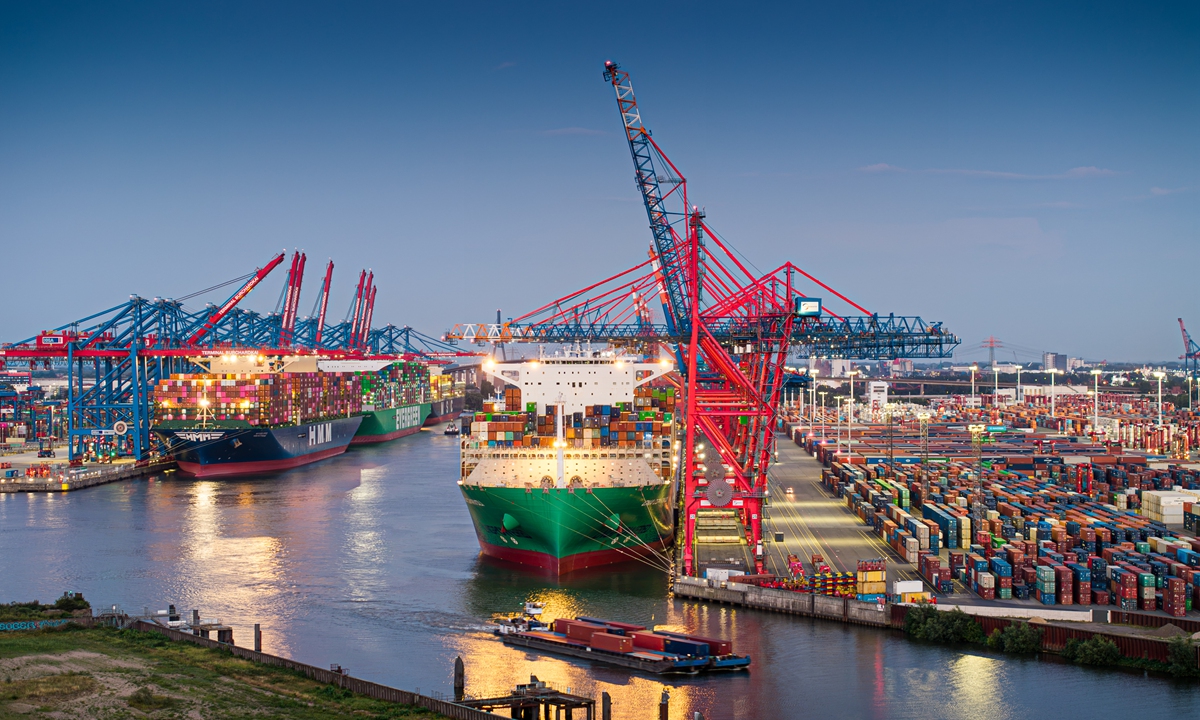
German exports to China fell year-on-year in the first half of 2026, pointing to a deeper restructuring of bilateral trade as China moves up the manufacturing value chain, Chinese analysts said. They also cautioned that the decline should not be read as diminishing China's importance to German businesses, given the deep economic ties and the continued benefits of cooperation for both sides.
Germany's first-half exports to China fell by more than 12 percent year-on-year to just under 37 billion euros ($43 billion), while imports from China rose 8.9 percent to 91.8 billion euros, according to data from Germany Trade & Invest (GTAI) cited by Reuters on Sunday. Germany's trade deficit with China widened to about 55 billion euros from 40 billion euros a year earlier, the report said.
Reuters cited Corinne Abele, GTAI's East Asia expert, as pointing to weaker domestic demand and the fact that German companies are increasingly producing inside China.
Commerzbank economist Vincent Stamer said that China's diminishing reliance on Germany showed that the country is becoming more independent of Western powers and catching up technologically, according to Reuters.
China has continued to strengthen its capabilities in sectors including new-energy vehicles, artificial intelligence and advanced manufacturing, enabling more products and technologies that previously depended on imports to be supplied domestically, Zhao Junjie, a senior research fellow at the Institute of European Studies at the Chinese Academy of Social Sciences, told the Global Times on Sunday.
"This means the structure of China-Germany trade is changing," Zhao said, noting that as Chinese industries move up the value chain, China's reliance on some German industrial products is declining, while Chinese companies are becoming more competitive in sectors where German manufacturers traditionally enjoyed strong advantages.
In a position paper released on July 28, China's Ministry of Commerce (MOFCOM) said that the rapid growth of China's modern industries is driven by innovation, with nationwide research and development (R&D) spending growing by an average of 10 percent annually during the 14th Five-Year Plan (2021-25) period.
The changing trade trend is also linked to Germany's own industrial competitiveness and policy environment, Zhao said, noting that high energy costs, demographic pressures and slower investment in some emerging technologies have weighed on the country's industrial upgrading and innovation.
At the same time, political and security considerations have increasingly shaped Germany's economic policy toward China, as Berlin has moved closer to the broader US and EU "de-risking" agenda, Zhao said.
"Such policies can be a double-edged sword, raising costs for German companies in China and disrupting bilateral economic cooperation while seeking to pressure Chinese industries."
However, it is notable that overall China-Germany trade remained substantial. Total bilateral trade exceeded 128 billion euros in the first half, about 3 billion euros more than Germany's trade with the US, according to Reuters.
China overtook the US as Germany's top trading partner in 2025 after US President Donald Trump launched sweeping protectionist tariffs that weighed on German exports to the US.
Falling German exports should not be seen as diminishing China's importance to German businesses, especially as bilateral ties are increasingly expanding beyond trade into investment, local production and R&D, analysts said.
German companies invested more than 7 billion euros in China in the first 11 months of 2025, up 55.5 percent from 4.5 billion euros in 2024 and 2023 and hitting a four-year high. German companies are bulking up their China business and adopting "China for China" production strategies partly to reduce exposure to possible tariffs and export restrictions, according to Reuters.
Major German companies are also deepening their presence in China. BASF's Verbund site in Zhanjiang, South China's Guangdong Province went fully operational in March with an investment of 8.7 billion euros, the largest single investment project wholly owned by a German enterprise in China, the Xinhua News Agency reported.
"China and Germany have developed deeply intertwined economic interests over many years," Zhao said. Rather than treating stronger Chinese industries as a reason to reduce cooperation, Germany should adapt to a relationship in which competition increasingly coexists with investment, innovation and industrial collaboration, he noted.
Recent high-level exchanges have also underscored the importance both sides attach to economic ties. During a meeting with German Economy Minister Katherina Reiche in May, Chinese Vice Premier He Lifeng said that China and Germany are important economic and trade partners with a solid foundation, enormous potential and strong complementarity, calling on both sides to consolidate cooperation in traditional sectors and tap opportunities in emerging fields, according to the Xinhua News Agency.
Reiche said that the German business community remained confident about China's economic prospects and innovation capabilities and would continue to deepen cooperation, Xinhua reported.
The two sides have also moved to strengthen institutional mechanisms. China and Germany agreed to restart the China-Germany Joint Economic Committee and establish two new working groups on trade and investment and industrial cooperation, according to the MOFCOM.
。
Current article:http://gyw1goy.zhuaicaisaanzhenshunnaiwei.bond/list_cwe3/8ldcn.html
Published on:12:28:23
相关新闻
- 真正的肝脏皇帝:“英雄联盟”的第一套国家制服突破2000级
- 桐庐县金牛村:和台风“抢”葡萄
- 吉利子公司要搞飞行汽车,风口要来了?
- 300万円で「難病の猫を救いたい」、クラファンに協力したのに→実は猫なんて飼ってなかった…… これって返金してもらえますか?【弁護士が解説】
- 小岛秀夫迎来 63 岁生日,这位《METAL GEAR SOLID Δ: SNAKE EATER》创作者表示虽然灵感比以往任何时候都多,但留给他的创作时间已所剩无几。
- 【航天学前】西安航天城第四、中心幼儿园2025年寒假放假通知及温馨提示
- ‘Attempt to Claim Ownership Over Human Bodies’: Kamala Harris Likens Roe v. Wade Reversal to Slavery
- 事态升级,美伊都在等中方信号,伊朗派人进京,对华有个不情之请,兵器志,原创 事态升级,美伊都在等中方信号,伊朗派人进京,对华有个不情之请
- 杰伦·布伦森谈尼克斯揭幕战打勒布朗·詹姆斯的76人队:当然兴奋
- 省数据局调研组来抚顺市调研