荡寇风云
福州西湖公园亭廊无障碍坡道试点投用_我的网站

一 | AI摘要 福州西湖公园谢坪屿亭廊无障碍坡道正式投用。

二 |
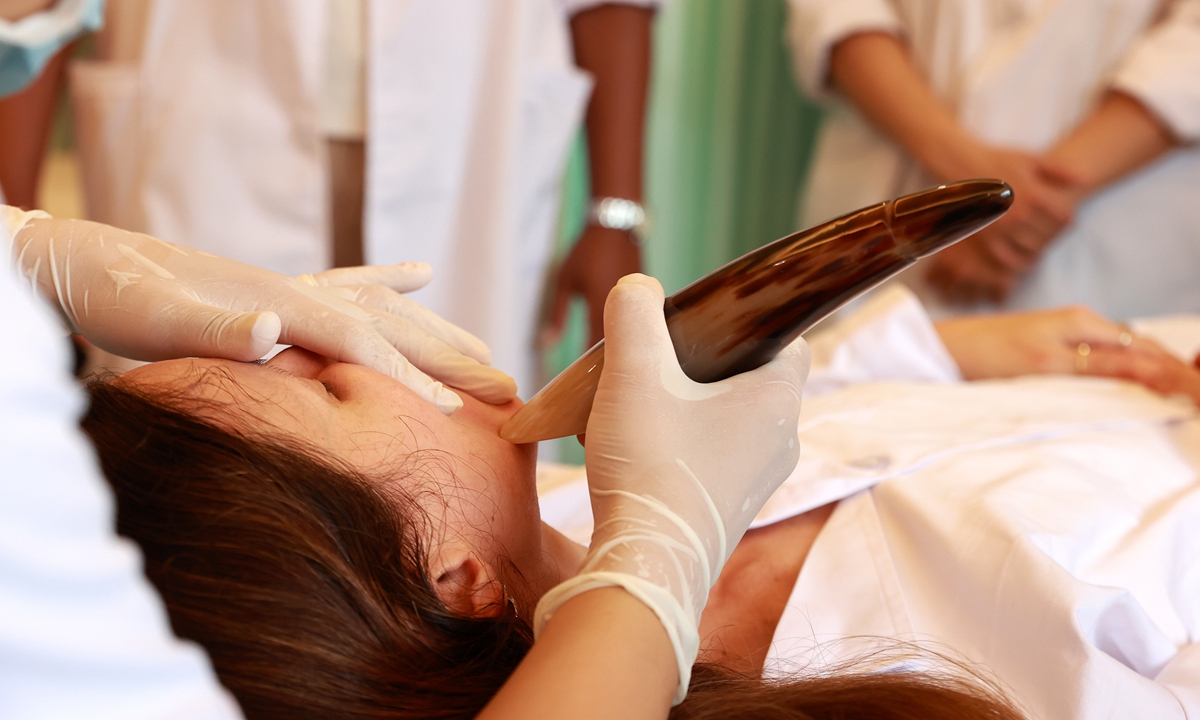
Starting in August, eight provincial-level regions will join the second phase of the program, bringing the total number of participating provinces and regions to 23, according to the National Medical Products Administration.
Under the pilot program, cosmetic registrants and authorized domestic entities can provide personalized services by mixing or dispensing two or more cosmetics in small batches based on consumers' individual needs.
At the Beijing Tong Ren Tang personalized cosmetic service skincare experience center, for example, a skin analysis can assess more than 30 indicators and generate a personalized skincare plan, based on which consumers can order tailored products, according to the People's Daily.
Twenty-four-year-old Beijing resident Zhao Xiyao was among the early consumers to experience the service. She told the Global Times on Sunday that when buying skincare products in the past, she relied largely on the brand's advertising or online "ingredient reviews." Even when she knew what problems her skin tended to develop, it was still difficult to determine which products were truly right for her.
"Compared with simply buying a bottle of skincare product, I care more about the skin analysis that comes before the personalized service," she told the Global Times. "At least it first tells you what condition your skin is in, and then selects products based on that condition, rather than having everyone use the same set of products."
For Zhao, the appeal of the experience goes beyond the novelty of the word "personalized."
"If it's just about changing the packaging or putting my name on it, I don't think that means much. What really makes it valuable to me is whether it can actually make a difference based on my individual situation," she said.
The idea of tailoring skincare to individual needs, however, is not entirely new. It echoes the traditional Chinese medicine (TCM) principle of taking individual differences into account.
Yi Lan, a TCM physician practicing in South China's Guangdong Province, told the Global Times that people with the same skin concerns may need different approaches because of differences in their constitutions, lifestyles and living environments.
However, she noted that TCM diagnosis and modern personalized cosmetics are not the same: The former involves a comprehensive assessment of an individual's overall condition, while the latter mainly matches products to skin conditions and consumer needs.
For personalized skincare, the key lies in whether this matching process can deliver meaningful results.
"If personalized services are to become a lasting consumer service, the key will be 'precision,'" Yi said. "The test results must be reliable; otherwise, the plan that follows has little meaning."
According to Yi, if ordinary products are simply combined in a different way without being able to explain why that combination is suitable for a particular person, then "personalization" can easily become a marketing concept.
At its core, personalized skincare is less about making a product more complicated than about making the choice more relevant to the person using it. Technology is giving the traditional idea of taking individual differences into account a new expression in the consumer market. However, the real test is whether it can translate into products that are genuinely better suited to the individual.
。

三 | 该设施兼顾功能与风貌,为特殊群体提供便利。

四 | 园区将总结试点经验,逐步在全园推广无障碍改造,完善便民服务体系。 近日,西湖公园谢坪屿亭廊无障碍坡道顺利通过验收并正式投用。

五 | 作为园区无障碍配套升级的创新试点,该设施将为特殊群体游览提供便利,后续将根据运营情况在全园适宜点位推广落地。

六 | 本次无障碍改造试点范围覆盖飞虹桥至谢坪屿亭廊区域。全新投用的无障碍坡道坐落于亭廊西侧,总长5.4米、宽1米,严格按照1比12的无障碍通行标准设计建设。

七 | 坡道采用仿古铺装材质,与园林风貌相得益彰,两侧加装防滑金属扶手,全程平顺衔接,可直达亭廊内部。坡道毗邻灌木丛与柠檬桉绿植,从湖面视角望去,设施隐于绿意之间,最大限度保留了古典园林景致,实现功能升级与风貌保护的双向兼顾。

八 | 同时,针对飞虹桥石拱桥的通行特点,园区增设了无障碍指示牌,并公示服务联系电话,可为特殊人群过桥提供即时帮扶服务。从飞虹桥下桥前行十余米即达亭廊区域,配套引导标识清晰规范,精准指引特殊游客通行。

九 | 小善公益创始人郭兵是该坡道的首批体验者,完善的无障碍设施让他得以沉浸式邂逅烟雨西湖的独特景致。“之前乘坐轮椅无法顺利进入亭廊。

十 | 体验当天恰逢阵雨,依托新建成的无障碍坡道,我和同伴能够安全、轻松地进入亭廊休憩。”郭兵说。 西湖公园管理处相关负责人表示,后续将持续跟踪本次试点坡道的运营使用情况,总结优化改造经验,逐步在园区其他景点推广无障碍升级改造,持续完善园区便民服务体系,全方位满足不同年龄段和不同群体的游览需求。(记者 石磊磊 孙漫)。
Current article:http://gyw1goy.zhuaicaisaanzhenshunnaiwei.bond/list_dmas5mg/ngxyp.html
Published on:13:41:21
 公主小妹
公主小妹 大明王朝1566
 伪娘
伪娘 老司机
老司机 幻夜
幻夜 百度翻译
百度翻译 谍影重重
谍影重重 人间正道是沧桑


